A Family Owned Business For Over 36 Years

Crafting print with precision since 1989—trusted by businesses, fueled by innovation, and driven by purpose.

Contact Us
  • 929 W 16th Street,
    Indianapolis, IN

  • 317 635 2282

.
Binder printing for business

Custom Printed Binders for Business

Printed covers, spines, interior panels, tabs, and divider sets, produced and finished in Indianapolis for organized business materials.

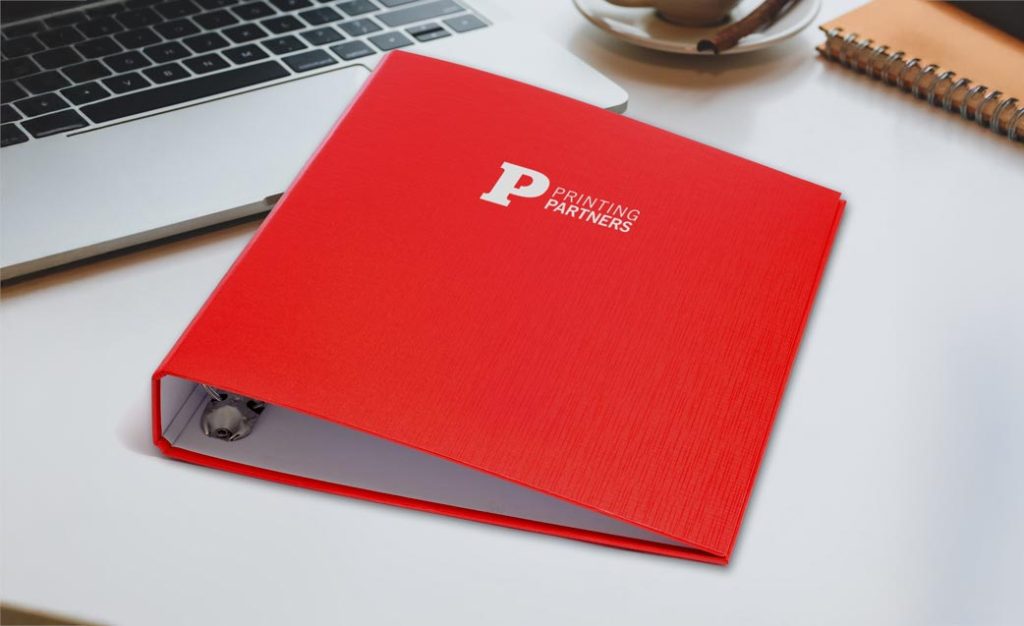
Red custom 3-ring binder with the Printing Partners logo printed on the front cover
Family-owned since 1989The O'Brien family of Indianapolis
115 professionalsFull-time printing and production team
55,000 square feetOffset, digital, and finishing under one roof
ISO 9001:2015Certified quality management system

What Are Custom Printed Binders?

Custom printed binders are 3-ring or wire binders with company graphics printed on the cover, spine, interior panels, or inserts instead of left blank. Printing Partners produces those printed components on its own presses for training manuals, sales kits, proposal binders, onboarding packets, and other business materials that need an organized, branded presentation.

A binder earns its place when the contents need to change. Pages can be added, removed, or replaced without reprinting a complete bound book, while the branded cover and divider system stay consistent from one version to the next.

Printing Partners is the printer and finisher in this workflow. We produce the cover sheets, spine graphics, inside panels, binder-ready pages, tabs, and dividers, then match those printed components to the sourced binder format specified for the project. Start with the broader presentation materials category if you are comparing several ways to package a sales or training kit.

The practical sourcing distinction

Binder shells and ring hardware are sourced components. Printing Partners does not claim to manufacture the shell, metal rings, or turned-edge case hardware. The in-house work is the printed content and the finishing that makes the finished binder specific to your organization.


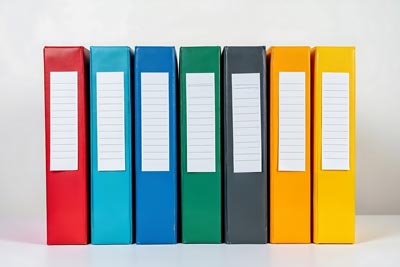
Row of custom binders in red, teal, blue, green, gray, and yellow spine colors

Ring Binder Types: Round Ring vs. D-Ring vs. Slant-D Ring

Ring shape controls both sheet capacity and page behavior. At the same stated size, a D-ring holds about 25% more 20 lb bond sheets than a round ring because its flat back edge uses more straight length. Round rings cost less, while slant-D and D-rings keep frequently used pages flatter and better aligned.

Representative capacity at a 1 inch ring size using 20 lb bond paper. Exact counts vary by manufacturer and can differ by about 1/8 inch of ring size.
Ring type Capacity at 1 inch Capacity vs. round Page behavior Best for Cost tier
Round ring About 175 to 190 sheets Baseline Pages can slide and bunch at the curve. Everyday binders, infrequent reference, and cost-sensitive projects. $
Slant-D ring About 200 to 220 sheets About 15% to 20% more The angled ring reduces bunching and provides moderate flatness. Binders that are opened often without being packed to capacity. $$
D-ring About 225 to 250 sheets About 25% more The flat back edge keeps pages flat and aligned. Rings mount to the back cover, not the spine. Training manuals, reference binders, and materials flipped through daily. $$

Choose D-ring hardware when people will open the binder repeatedly or work close to capacity. Choose round rings when the binder is used occasionally and the lowest component cost matters more than maximum capacity or page alignment.

Ring Size and Sheet Capacity Chart

Ring capacity runs from about 90 to 100 sheets in a 0.5 inch round-ring binder to about 625 to 675 sheets in a 3 inch D-ring binder. Counts vary by manufacturer and paper thickness. Plan to fill a binder to about 80% of rated capacity so pages turn cleanly and tabs have room.

Approximate sheet counts use standard 20 lb bond paper. Divider stock, pockets, and heavier interior paper reduce usable capacity.
Ring size Round ring, approximate sheets D-ring, approximate sheets Typical use
0.5 inchAbout 90 to 100About 115 to 125Thin handouts, single-meeting packets, and short reference cards.
1 inchAbout 175 to 190About 225 to 250Single-subject training modules and short proposals.
1.5 inchesAbout 270 to 300About 335 to 360Multi-section training manuals and project files.
2 inchesAbout 360 to 400About 450 to 480Full onboarding kits and year-long reference binders.
3 inchesAbout 500 to 570About 625 to 675High-volume manuals, multi-year archives, and large proposal sets.

A 200-sheet, single-sided training manual fits a 1 inch D-ring or a 1.5 inch round-ring binder with useful room remaining. If the manual uses two-sided printing, count physical sheets rather than numbered pages before selecting the ring.

Binder Construction: Vinyl, Poly, and Turned-Edge

Binder construction changes how the cover handles, prints, and presents. Vinyl wraps rigid board for familiar everyday use. Poly is flexible and resistant to moisture and tearing. Turned-edge construction wraps a litho-printed sheet around rigid board for a full-bleed cover, while a clear overlay protects a replaceable printed insert.

Construction descriptions compare common binder formats. Binder shells and hardware are sourced components, not items manufactured by Printing Partners.
Construction Structure Durability Print presentation Buyer decision
Vinyl, standard Vinyl covering over rigid board. Moderate. It resists everyday handling, while seams can wear under years of heavy use. Good. The cover can use a direct print or an applied printed graphic. Compare it when a familiar rigid binder is the priority.
Poly A flexible plastic cover without a rigid board core. High. Poly resists moisture and tearing and can be wiped clean. Good. Full-color graphics print on the poly surface. Compare it for field use and frequently handled materials.
Turned-edge A litho-printed sheet wraps and glues around rigid board at the edges. High. The rigid board supports a substantial cover. Excellent. Full-bleed printing can continue across the cover and spine without a clear sleeve. Compare it when the printed cover itself is part of a client-facing presentation.
Board with clear overlay Rigid board is protected by a clear plastic slip-in sleeve. Moderate to high. The sleeve protects the separate printed insert. Excellent. The insert uses full offset or digital print quality and can be replaced. Compare it when the cover message changes more often than the binder shell.

Material names do not answer every sourcing question. Specify whether the binder will stay in an office, travel to job sites, be opened daily, or represent the company in a client meeting. Those details guide the component and print recommendation.

Personalized Binder Dividers and Tab Sets

Personalized binder dividers are printed tab pages, commonly arranged in 5-tab or 8-tab sets, that separate a binder into labeled sections. Standard paper works for controlled office use, while reinforced or poly tabs withstand more handling. Printing Partners prints section titles, numbers, or full-color graphics directly on the divider system.

Build the tab plan before pagination. A five-section training manual may use Orientation, Safety, Procedures, Forms, and Reference, while a proposal binder may use Executive Summary, Scope, Schedule, Team, and Supporting Documents. Clear labels reduce the time a reader spends searching for the right page.

Tabs also occupy physical space. Include the number and material of divider sheets when using the capacity chart, especially when the ring size is close to the estimated page count.

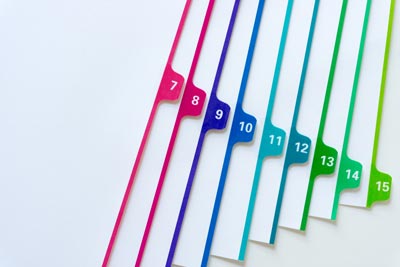
Colorful custom binder tabs numbered 7 through 15 inside an open 3-ring binder

Pockets, Business Card Slots, and Other Binder Add-Ons

Inside front and back pockets hold loose handouts, business card slots keep contact details with the presentation, and a clear overlay creates a slip-in cover that can be changed without replacing the binder. These features are configured per order, not automatic, so list each required pocket, slot, sleeve, and printed panel when requesting a quote.

  • Inside front pocketHolds a welcome sheet, agenda, or documents that should not be punched.
  • Inside back pocketKeeps forms, reference sheets, or leave-behind materials separate from the main content.
  • Business card slotPairs a named contact with a sales kit, proposal, or client presentation.
  • Clear overlayAccepts a replaceable cover or spine insert when the title changes between uses.

Quote clearly: State which panel receives each feature and whether the printed piece must be inserted before delivery. That prevents a front-pocket request from being interpreted as a back-pocket request and keeps the artwork plan aligned with the sourced shell.

Spine Width and Label Sizing

Binder spine width is generally about 0.25 inch wider than the stated ring size. A 2 inch ring therefore uses an approximately 2.25 inch spine. A 0.5 inch binder has a very narrow usable spine. Binders from 1.5 to 3 inches fit a standard commercial spine label that measures 1.375 by 5.375 inches.

Spine widths are approximate. Confirm the exact sourced binder before final artwork because shell construction can change the printable panel.
Ring size Approximate spine width Standard spine label fits? Labeling recommendation
0.5 inchAbout 3/16 to 1/4 inchNo, it is too narrow.Print on the cover panel instead of using a separate spine label.
1 inchAbout 1.25 inchesMarginal. Use a custom-cut label.Use a narrower custom label or print directly on the spine panel.
1.5 inchesAbout 1.75 inchesYes.Use a standard 1 3/8 by 5 3/8 inch spine label.
2 inchesAbout 2.25 inchesYes.A standard label has room for a logo and title.
3 inchesAbout 3.25 inchesYes.A standard label has room for a logo, title, and volume number.

If a spine label is part of the plan, Printing Partners can produce the printed label with the rest of the project. See the labels page for the related product category.

What Paper Works Best Inside a Printed Binder?

Use 20 lb to 24 lb bond for most binder interior pages, drilled or punched for standard 3-ring spacing. Choose 28 lb or heavier stock for divider sheets, section openers, or pages handled repeatedly. Printing Partners can print and prepare binder-ready interior sheets with the cover, spine, tabs, and dividers in the same project.

Paper weight changes both feel and capacity. A capacity chart based on 20 lb bond will overstate the number of sheets when the manual uses heavier paper, laminated pages, or many divider tabs. Send the final paper specification and physical sheet count with the quote request.

A binder is best when pages must remain replaceable. If the page sequence is fixed and the document should read like a finished book, compare the options in the binding guide.

Close-up detail of a metal 3-ring binder mechanism open on ruled paper
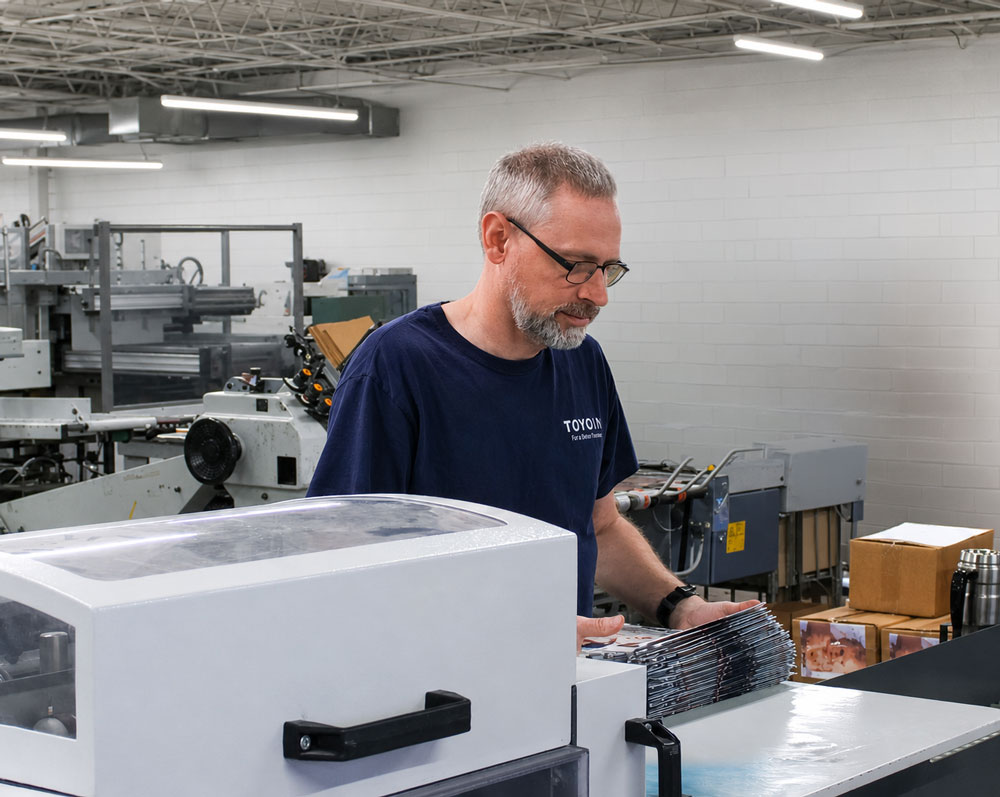
Printing Partners bindery technician finishing printed materials on the production floor

Personalized Binders for Business: Training Manuals, Sales Kits, and Proposal Binders

Personalized binders for business work best when the contents change, grow, or return in repeat cycles. Training and onboarding manuals can be refreshed for each class, sales kits can combine brochures with product sheets, and proposal binders can organize an RFP response into labeled sections that look intentionally assembled instead of simply stapled.

Promotional binders also keep a full set of materials together after a meeting. If a buyer only needs a slim packet with a few loose sheets, pocket folders may be the more compact choice.

For fixed-page manuals, compare wire-o binding, perfect binding, and case binding or hardcover book binding. Printing Partners also provides book printing for training and reference documents that should remain in a permanent sequence.

How Printing Partners Produces Custom Binders

Printing Partners prints binder covers, spine graphics, interior panels, insert sheets, and tab dividers in house using offset or digital printing. The printed pieces are laminated, trimmed, and finished in the company's Indianapolis bindery at 929 W 16th Street. Binder shells and ring hardware are sourced components rather than equipment manufactured by Printing Partners.

  1. Define the contentsConfirm the finished page size, physical sheet count, paper weight, divider count, and whether pages print one-sided or two-sided.
  2. Select the binder formatChoose ring shape, ring size, construction, pockets, sleeve, and spine treatment based on how the binder will be used.
  3. Print and finish the componentsPrinting Partners produces the covers, spine graphics, interior pages, inserts, tabs, and dividers, then applies the specified finishing.
  4. Match the sourced componentsThe printed pieces are planned around the approved binder shell and hardware so panel sizes, holes, and tabs align with the final format.

Why Choose Printing Partners for Custom Binder Printing?

Printing Partners is a family-owned Indianapolis commercial printer established in 1989. A team of 115 full-time professionals works across 55,000 square feet under one roof for offset, digital, direct mail, and finishing. The company is G7 Master Colorspace Certified, ISO 9001:2015 Certified, and FSC Certified, providing documented process and accountable local service.

  • Family-owned since 1989The O'Brien family of Indianapolis owns and runs the company, with Joel O'Brien as owner.
  • One production locationOffset, digital, direct mail, and finishing operate in 55,000 square feet at 929 W 16th Street.
  • 115 full-time professionalsA commercial printing team sized for repeat business programs and detailed production coordination.
  • Three verified certificationsG7 Master Colorspace Certified, ISO 9001:2015 Certified, and FSC Certified.
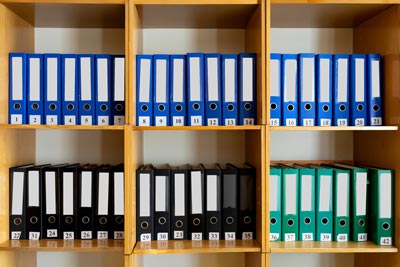
Shelves of blue, black, and green custom printed binders organized in bulk

Frequently Asked Questions About Custom Printed Binders

These answers cover the binder decisions buyers ask about most: ring shape, sheet capacity, construction, paper, tabs, pockets, and spine labels. The figures use 20 lb bond paper and industry capacity averages, so final specifications should reflect the sourced binder components, printed sheet thickness, divider count, and how often the finished binder will be handled.

What's the difference between a D-ring binder and a round ring binder?

A D-ring binder has a flat back edge instead of a curve, so it holds about 25% more sheets at the same stated size and keeps pages flatter and better aligned. A round ring binder is more economical and works well for binders that are not opened often or packed near capacity.

What size binder do I need for a 200-page training manual?

A 200-page document, roughly 200 sheets when printed single-sided, fits comfortably in a 1 inch D-ring binder or a 1.5 inch round-ring binder while staying under the recommended 80% capacity. Add room for tab dividers because each divider uses some of the available ring space.

What's the difference between vinyl, poly, and turned-edge binders?

Vinyl is the standard covering over rigid board. Poly is a flexible, moisture-resistant, and tear-resistant plastic suited to heavier handling. Turned-edge binders use a litho-printed sheet wrapped fully around rigid board for a full-color cover without a clear overlay. Final availability depends on the sourced binder specification.

How many sheets fit in a 1 inch binder?

A 1 inch round-ring binder typically holds about 175 to 190 sheets of standard 20 lb bond paper, while a 1 inch D-ring binder holds about 225 to 250 sheets. Exact capacity varies by manufacturer, so plan for about 80% of the stated maximum in daily use.

What paper should I use for binder pages?

Most printed binder interiors use 20 lb to 24 lb bond paper, punched for standard 3-ring spacing. Use 28 lb or heavier stock for divider pages, section openers, or sheets that people handle repeatedly. Heavier paper reduces the number of sheets that fit on a given ring size.

Can I get custom tab dividers printed for my binder?

Yes. Personalized binder dividers are commonly planned in 5-tab or 8-tab sets and printed with section titles, numbers, or full-color graphics. They organize training guides, multi-section reports, and proposal binders into clearly labeled sections. Confirm the divider material and tab sequence when requesting the quote.

What's the difference between a spine label and a printed spine?

A spine label is a separate printed strip applied to the outside of the binder spine. The common 1 3/8 by 5 3/8 inch size fits binders 1.5 inches or larger. A printed spine is part of the cover graphic and works better on narrow binders where a standard label will not fit.

Do custom printed binders work for sales kits and proposal binders, not just training manuals?

Yes. Businesses use custom printed binders for sales kits that combine brochures with product sheets and for proposal binders that organize an RFP response into labeled sections. Branded covers, pockets, and dividers make both formats easier to review and more intentionally assembled than a loose or stapled packet.

What binder add-ons can I include, like pockets or business card slots?

Common add-ons include inside front and back pockets for loose handouts, a business card slot, and a clear overlay or slip-in cover sleeve that lets the front graphic change later. These features are configured per order rather than included automatically, so identify each required location when requesting a quote.

How do I figure out what spine width my binder needs?

Spine width generally runs about 0.25 inch wider than the stated ring size, so a 2 inch ring binder has an approximately 2.25 inch spine. Binders under 1.5 inches often have too little space for a standard spine label and are better suited to direct spine printing or a custom-cut label.

Request a Custom Binder Quote

Request a binder quote with the finished page size, estimated sheet count, quantity, preferred ring shape, cover treatment, divider plan, and required pockets or slots. Printing Partners will use those specifications to recommend the printed components and sourced binder configuration, then price the complete project without assuming one standard package fits every training manual or sales kit.

Printing Partners, 929 W 16th Street, Indianapolis, IN 46202
Call 317-635-2282.