A Family Owned Business For Over 36 Years

Crafting print with precision since 1989—trusted by businesses, fueled by innovation, and driven by purpose.

Contact Us
  • 929 W 16th Street,
    Indianapolis, IN

  • 317 635 2282

.

Case Binding or Hardcover Book Binding

Hardcover Book Binding Services in Indianapolis

Case Binding and Hardcover Book Binding in Indianapolis

Case binding is how a hardcover book gets made: a bound text block set into a rigid cover of cloth or printed boards. Printing Partners runs case binding and hardcover book printing in house in Indianapolis, for yearbooks, cookbooks, presentation pieces, and any case bound book built to be kept, not skimmed once and shelved.

  • In-house bindery, not outsourced
  • Pages 32 to 800
  • ISO 9001:2015, G7 Color, and FSC certified

What is case binding?

Case binding is the hardcover book binding method where a bound text block is glued or sewn, fitted with endsheets, then cased into a rigid cover made of chipboard wrapped in cloth or printed and laminated paper. It is the most protective everyday binding and the format that reads as premium on a desk or a shelf.

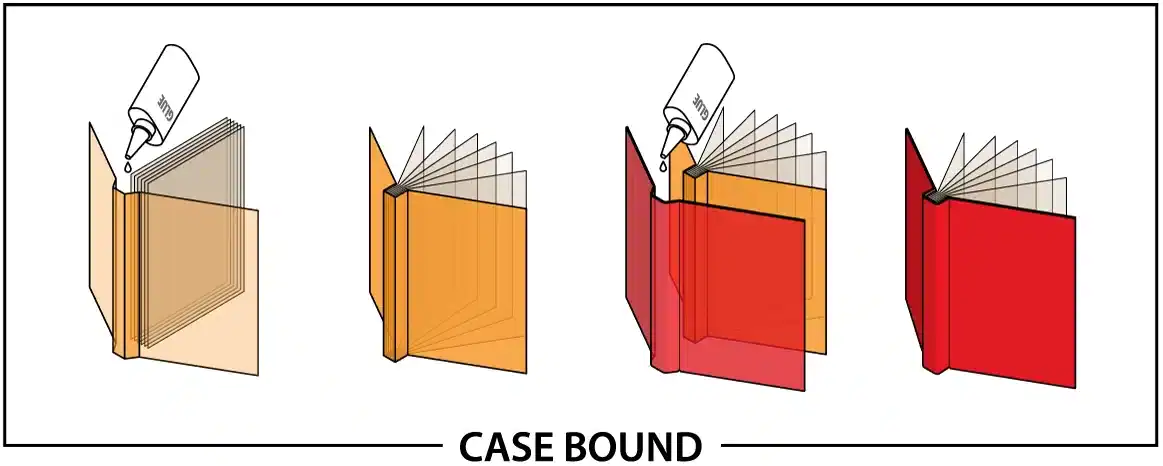
Diagram of case binding: a text block hinged with endsheets into rigid boards wrapped in cloth or printed paper.
How it is built: text block cased into rigid boards
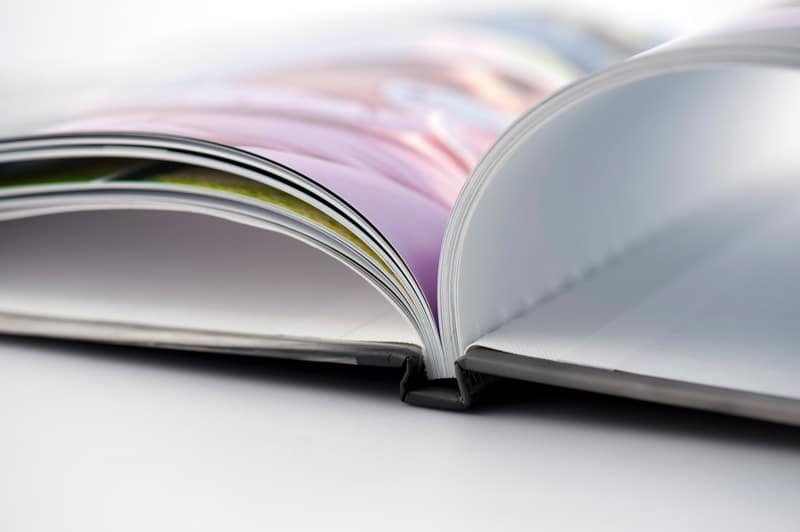
Open hardcover case bound book showing the rigid cover and bound text block.
Finished hardcover case bound book

The name comes from the case, the rigid cover assembled separately from the pages and then attached with endsheets that hinge the block to the boards. Most hardcover book printing uses a glued text block inside the case. Upgrading to a sewn text block, known as Smyth sewn case binding, adds durability and lets the book open flatter, at a higher cost and longer lead time. From there the choices are largely protective and cosmetic: foil stamping or embossing on the cover, a printed dust jacket, head and tail bands at the spine, and a ribbon marker.

Hardcover printing and binding costs more than a softcover run and takes longer to produce, but for a book meant to be kept rather than read once and set aside, it is the format that holds up on a shelf, a desk, or in circulation.

Best for hardcover books, yearbooks, cookbooks, and presentation pieces

Case binding earns its cost on books that get handled for years, not weeks. Four project types come back to us for hardcover most often.

Hardcover books and gift editions

Memoirs, commemorative histories, and keepsake editions where the cover is part of the gift.

Yearbooks

Cased, and often Smyth sewn, so a book passed around a classroom for a decade still holds together.

Cookbooks

A hardcover case survives kitchen use, spills included, better than a softcover binding does.

Presentation and proposal pieces

A bound proposal or leave-behind that reads as considered, not printed at the last minute.

Case binding covers a wide page range, from a 32 page keepsake booklet to an 800 page reference volume. Heavier cover boards and thicker interior stock change the binding thickness, not the practical page range.

Case binding specifications

Every hardcover job is spec'd around four choices: how many pages, what covers the boards, what finish goes on top, and what the endsheets look like.

  • Pages 32 to 800
  • Cover rigid chipboard, cloth or printed and laminated paper
  • Endsheets plain or printed
  • Finish options foil stamp, emboss, dust jacket, head and tail bands
  • Good

    • Highest protection and shelf presence of any binding
    • Takes foil stamping, embossing, and a dust jacket
    • Text block can be glued or Smyth sewn depending on use
  • Watch

    • Highest cost of the binding methods we run
    • Longer production time than softcover binding
    • Standard case binding does not lie fully flat, Smyth sewing improves this
Durability High
Relative cost High

Cover board caliper, exact foil and emboss vendor options, and hardcover run minimums vary by job. Send your specs with the quote request and we will confirm before print.

Case binding vs. Smyth sewn vs. perfect binding

All three bind a stack of pages. The difference is what holds the pages together and what covers them. Perfect binding glues pages into a soft, printable spine. Case binding sets a bound text block into a rigid hardcover. Smyth sewn binding sews the pages with thread before casing them in, and it is most often paired with a hardcover for maximum durability. Case binding without sewing is the standard hardcover; add Smyth sewing when a book needs to survive years of heavy use or open closer to flat.

Case bound, Smyth sewn, and perfect binding compared. Page counts are practical working ranges on standard text stock, not hard limits.
Binding Text block Cover Lies flat Durability Relative cost
Perfect binding Glued, ground to a flat spine Soft, printable spine No Good Low
Case bound Glued or Smyth sewn Rigid, cloth or printed boards No High High
Smyth sewn Sewn signatures Hard or soft, usually cased in Yes Highest Highest

Sizing a softcover instead? See the full perfect binding rundown on our binding guide. Need maximum durability? Read the dedicated Smyth sewn book printing page. For every method side by side, visit the book binding guide.

Why choose Printing Partners for hardcover book binding

Case binding is only as good as the shop running it. Printing Partners binds every hardcover book in house at our Indianapolis facility, on the same site as the press room, so nothing waits on a subcontractor and nothing gets handled twice.

In-house bindery

Text block binding, casing in, foil stamping, and finishing all happen under one roof at 929 W 16th Street. Hardcover work is not outsourced to a separate bindery.

Certified quality

G7 Color Certified, ISO 9001:2015 Certified, and FSC Certified for consistent color and paper sourcing on every run.

Over 35 years local

Printing and binding in Indianapolis for over 35 years, trusted by publishers, authors, and businesses across the United States for hardcover book binding services that hold up.

Book printing, start to finish

Printing, case binding, and finishing run together, so a hardcover book is one job, not a print order handed off to someone else's bindery. See our book printing services.

Case binding and hardcover book binding, answered

What is case binding?

Case binding is the hardcover book binding method where a bound text block is glued or sewn, fitted with endsheets, then cased into a rigid cover made of chipboard wrapped in cloth or printed and laminated paper. It is the most protective everyday binding and the format that reads as premium on a desk or a shelf.

Is case binding the same as hardcover book binding?

Yes. Case binding is the technical name for what most people call hardcover book binding. The case is the rigid cover, built from chipboard wrapped in cloth or printed and laminated paper, and casing in is the step where that cover is attached to the bound text block. Hardcover printing and binding and case binding describe the same finished book.

What is the difference between case binding and Smyth sewn binding?

Case binding describes the rigid hardcover itself. Smyth sewn describes how the pages inside are held together, sewn with thread through each folded signature rather than only glued. Most hardcover books use a glued text block inside a case, and adding Smyth sewing to that case bound book is an upgrade that lets it open flatter and survive far more use before pages loosen.

What is the difference between case binding and perfect binding?

Perfect binding glues pages into a soft, flexible cover with a printed spine, the standard paperback. Case binding takes a similar bound text block and sets it into a rigid hardcover instead. A case bound book costs more and takes longer to produce, but it protects the pages better and has more shelf and gift presence than a perfect bound softcover.

How many pages can be case bound?

Case binding works from about 32 pages up to roughly 800 pages on standard text stock. Thinner books use lighter cover boards to keep the proportions right, and very long books may need a thicker binding edge or a split volume. Page counts outside that range are possible, ask us to spec it before you quote the job.

What is library binding, and is it the same as case binding?

Library binding is a heavy duty version of case binding, built specifically to survive repeated circulation. It typically pairs a Smyth sewn text block with reinforced cover boards and durable covering material, and libraries also use it to rebind worn paperbacks into hardcovers. Standard case binding is lighter duty and works for most hardcover book printing that will not see library level handling.

Does a case bound book lie flat when open?

Not fully, in the standard configuration. A glued text block inside a case opens most of the way but will not sit flat on its own the way a coil or Smyth sewn book does. If a hardcover needs to lie flat, for a cookbook or a photo book, specify a Smyth sewn text block inside the case, the sewing lets the pages open further and stay open.

Does Printing Partners bind hardcover books in house in Indianapolis?

Yes. All case binding and hardcover book binding at Printing Partners happens in house at our facility at 929 W 16th Street, Indianapolis, Indiana. Text block binding, casing in, foil stamping, and finishing are done on site, so hardcover jobs are not outsourced to a separate bindery.

Get a hardcover quote

Ready to case bind your book? Tell us the project.

Send the page count, quantity, trim size, and how the book will be used, gift edition, yearbook, cookbook, or proposal piece. We will recommend cover materials and finishes, quote it, and bind it in house in Indianapolis.

Printing Partners
929 W 16th Street, Indianapolis, IN 46202
317-635-2282

Request a hardcover binding estimate

Use the estimate form to send your specs. Include page count, quantity, trim size, cover material, and any foil or emboss finish, and we will match the binding to the job.

Start my estimate

Last updated: August 12, 2026. Binding performed in house in Indianapolis. Page counts and board specifications are practical working ranges and vary with stock, trim size, and cover material.