Perfect binding is the binding behind almost every paperback, catalog, and manual on the shelf: pages ground flat and glued into a square, printable spine. Printing Partners runs a large in-house perfect binder at our Indianapolis facility and handles everything from short digital runs to high-volume production without outsourcing.
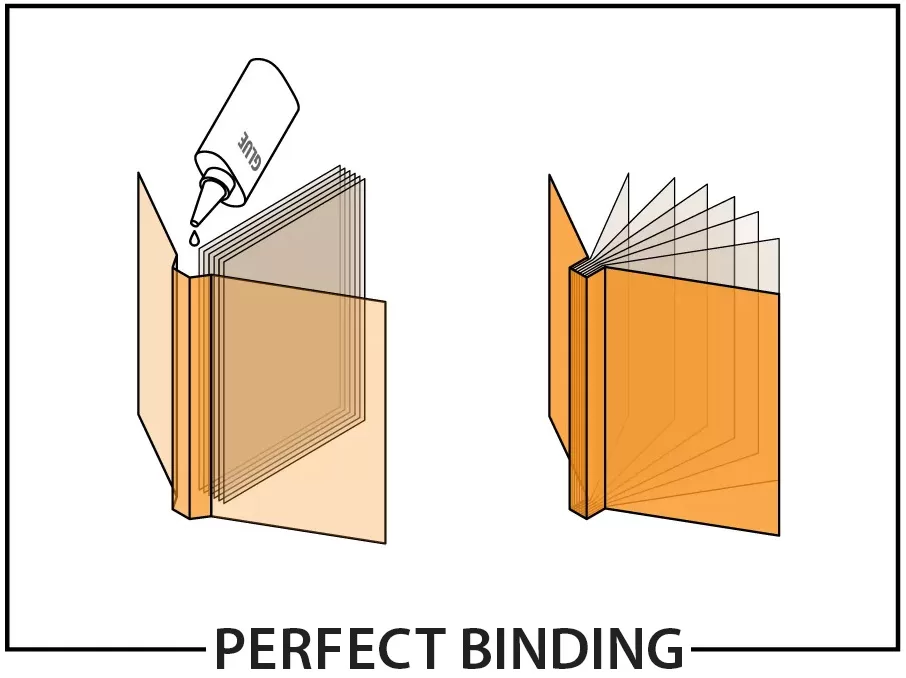
Perfect binding is a bookbinding method where the spine edge of a gathered text block is ground flat, then bonded to a wraparound cover with a strong adhesive. The result is the flat, square, printable spine found on most paperback books, trade catalogs, and manuals. It is sometimes called perfect bound or softcover binding.
Unlike saddle stitch, which staples through a single folded spine, perfect binding is not tied to a fold and can carry far more pages. Unlike case binding, the cover is a flexible wraparound rather than a rigid board, which keeps material cost and turnaround down. That combination, a printable spine at a paperback price, is why perfect binding is the default choice for any book meant to sit on a shelf.
Printing Partners runs perfect binding in house at 929 W 16th Street, Indianapolis, under G7 Master Colorspace and ISO 9001:2015, so color, register, and spine quality are controlled on the same floor as the press run, not handed off to a third-party bindery.
Perfect binding suits any document over roughly 48 pages that needs a square, printable spine: paperbacks, trade publications, catalogs, annual reports, and manuals. Below about 48 pages there usually is not enough bulk to build a spine that reads cleanly, and saddle stitch is the more economical fit.
The standard binding for fiction and trade paperbacks, with a spine that carries the title on a shelf.
A clean, professional spine for product and dealer catalogs run at volume.
A finished, bookstore-quality look for reports that get kept, not filed.
Thick reference material that needs a durable spine but not a hardcover.
Practical working range on standard text stock is about 48 to 800 pages. Heavier or coated stock lowers the maximum, and unusual trim sizes or page counts should be confirmed with production before a job is finalized.
Perfect binding is also the method behind most catalog binding. Our book binding guide compares perfect binding against every method Printing Partners runs, including catalog-specific specs, if that is the term you started from.
These are practical working specs for standard perfect binding runs on text and cover stock. Confirm exact minimums, maximums, and glue selection with production for anything outside a standard trim size or page count.
For longer runs and heavier coated stock, Printing Partners uses PUR (polyurethane reactive) adhesive, which stays flexible after it cures and resists spine cracking far better than standard EVA glue. Shorter runs on lighter text stock run efficiently on EVA without the added cost. We select the adhesive based on your page count, paper, and run length, not a single house default.
Good. Holds up to normal shelf handling and repeated reading.
Low at volume. The most cost efficient way to get a printable spine.
Realistic run minimum is about 6 copies for a single unit; run maximum shown is a practical working ceiling, not a hard limit. Confirm both with production before quoting an unusual job.
Saddle stitch is the cheapest and fastest option for thin booklets but tops out around 64 pages with no printable spine. Perfect binding takes over once a book has enough pages to build a spine and needs to look like a paperback at a fair price. Case binding costs more and takes longer, but the rigid hardcover survives far more handling and reads as a premium object.
| Binding | Best for | Page range | Lies flat | Durability | Relative cost |
|---|---|---|---|---|---|
| Saddle stitch | Thin booklets, programs, short catalogs | 8 to 64 | Nearly | Low | Lowest |
| Perfect binding | Paperbacks, catalogs, manuals, novels | 48 to 800 | No | Good | Low |
| Case bound | Coffee table, yearbooks, gift editions | 32 to 800 | No | High | High |
For a deeper look at either alternative, see our full saddle stitch binding page for thin booklets and programs, or our full case binding and hardcover book binding page for books meant to be kept for decades. Both are bound in house alongside perfect binding.
Spine width depends on page count, paper weight, and cover stock, and getting it wrong throws off the whole cover layout before it ever reaches press. Use the free perfect bound spine calculator to get an exact spine width for your project before you build your cover file.
Printing Partners is Indianapolis's in-house source for perfect binding: the machine, the press, and the prepress team are under one roof, so a job never waits on a subcontracted bindery. That is true whether you need 6 author copies or a 5,000-piece catalog run.
We run perfect binding on a large in-house binder at 929 W 16th Street, handling both short digital runs and high-volume production without outsourcing to a trade bindery. Every job runs under G7 Master Colorspace for consistent, repeatable color and ISO 9001:2015 for a documented quality system, the same standards that govern every press run in the building.
Digital short runs and high-volume production, on one machine, on site.
Consistent color from cover to interior, run to run.
A documented quality system behind every job that leaves the building.
Press, prepress, and bindery under one roof in Indianapolis.
Perfect binding is a bookbinding method where the spine edge of a gathered text block is ground flat and glued to a wraparound cover with a strong adhesive. It produces the flat, square, printable spine seen on most paperback books, catalogs, and manuals. It is also called perfect bound or softcover binding.
Perfect binding works best on documents from about 48 pages up to 800 pages on standard text stock. Below 48 pages there usually is not enough bulk to build a spine that reads well, and saddle stitch is the better choice. Heavier or coated stock lowers the practical maximum, so confirm exact page counts with production for unusual jobs.
Perfect binding uses a flexible wraparound cover glued to a flat spine, which keeps material cost and turnaround down. Case binding uses a rigid board cover wrapped in cloth or printed paper, which costs more and takes longer but is far more durable and reads as a hardcover. Choose perfect binding for a paperback at volume, and case binding for a book meant to be kept for years. See our full case binding and hardcover page for specifications.
Saddle stitch staples folded sheets through the spine fold and works best under about 64 pages, with no printable spine. Perfect binding grinds the spine flat and glues on a cover, which supports far more pages, from about 48 up to 800, and gives you a flat, printable spine to read on a shelf. Thin booklets are cheaper saddle stitched; anything thick enough to need a spine title should be perfect bound. See our full saddle stitch binding page for specifications.
EVA (ethylene vinyl acetate) is a standard hot melt adhesive that works well for most short and mid-length runs on uncoated text stock. PUR (polyurethane reactive) adhesive stays flexible after it cures and resists spine cracking far better than EVA, which makes it the better choice for longer runs, heavier page counts, and coated or synthetic stocks. Printing Partners selects between PUR and EVA based on your paper and page count, not a single house default.
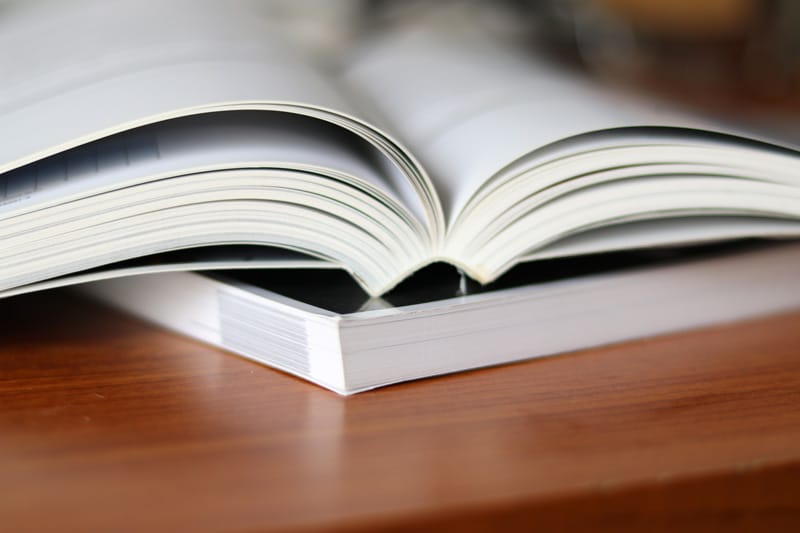
No. A perfect bound book opens close to flat with normal handling, but the glued spine keeps it from lying fully open the way a coil, Wire-O, or Smyth sewn book does. If a book must lie completely flat, such as a cookbook or workbook, coil or Wire-O binding or an Otabind lay-flat softcover are better choices.
Yes. Catalog binding usually refers to a perfect bound catalog with a printable spine, and it is one of the most common uses of the method alongside paperbacks and manuals. Our binding guide hub compares perfect binding against every method Printing Partners runs, including catalog-specific specifications.
Printing Partners runs perfect binding in house for both short digital runs and high volume production, with a realistic minimum around 6 copies and no practical maximum on standard runs of 5,000 copies and up. Confirm exact minimums for your trim size and stock with production when you request a quote.
Send us the page count, trim size, and quantity. We will confirm the spine build, recommend PUR or EVA glue, and print and bind it in house at 929 W 16th Street, Indianapolis. Runs from about 6 copies to 5,000 and up.
Printing Partners
929 W 16th Street, Indianapolis, IN 46202
317-635-2282
Use the estimate form to send your specs. Include page count, trim size, quantity, and cover stock, and we will match the glue and machine setup to the job.
Start my estimateLast updated: August 12, 2026. Perfect binding performed in house in Indianapolis. Page counts, run minimums, and glue selection are practical working ranges and vary with stock, trim size, and run length. Confirm exact figures with production before finalizing a quote.
© Printing Partners. All rights reserved. | Privacy Policy | Publishing Principles | Ownership & Funding Info | Feedback Policy | Corrections Policy | Ethics Policy | Diversity Policy | Diversity Staffing Report | Accessibility Statement | LLMS