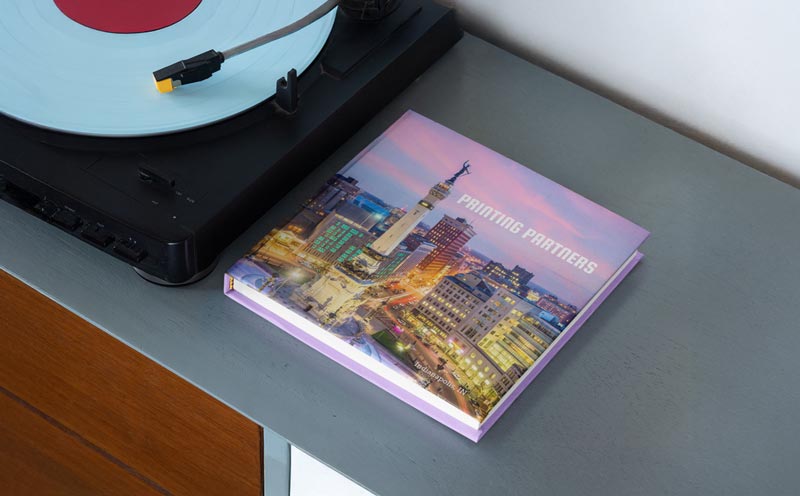
Thread-sewn signatures create books that open flat, hold pages securely, and stand up to repeated use.
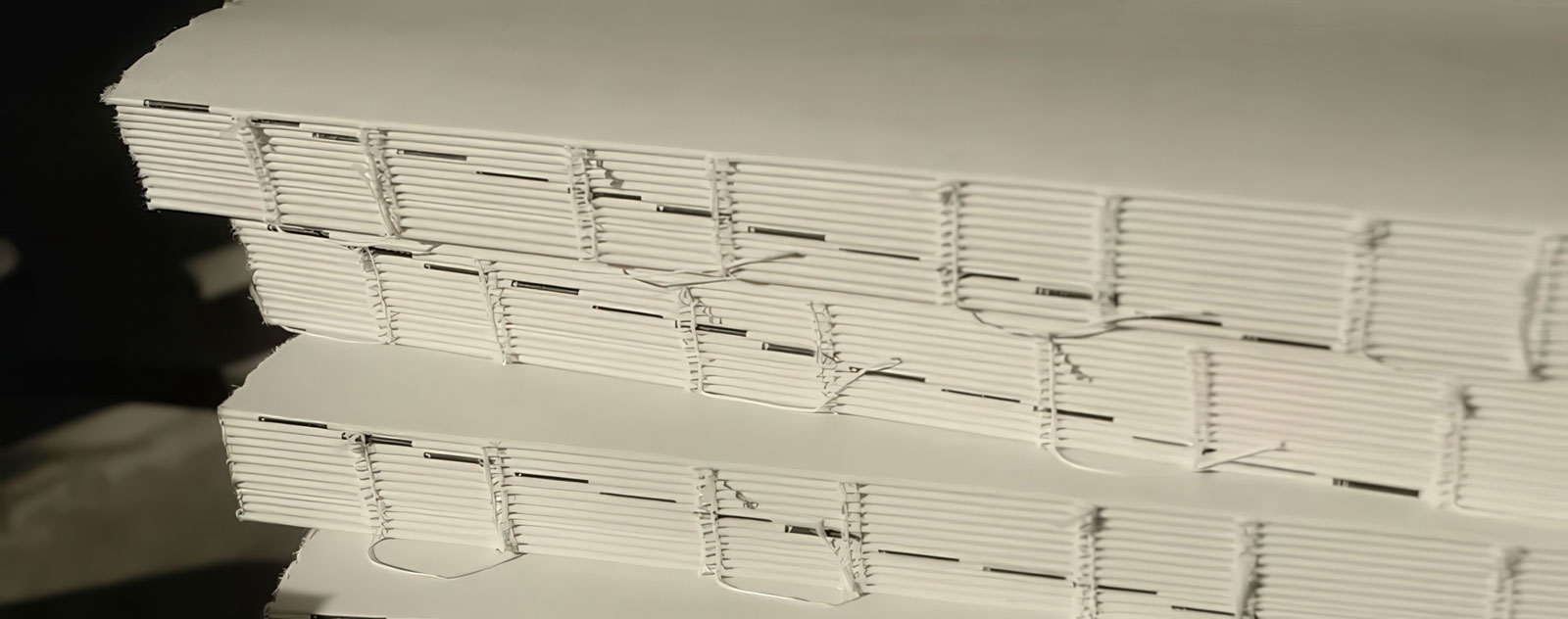
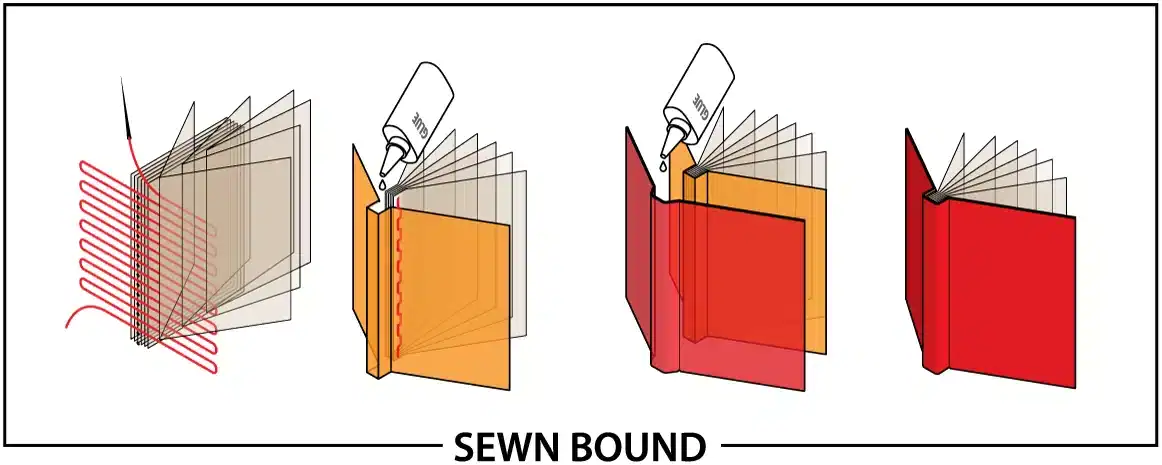
Smyth sewn binding is a bookbinding method that sews folded signatures together with thread before the book is cased in. The stitching runs through the center fold of each signature and links one signature to the next, which lets the finished book open flat and keeps pages from working loose over years of use.
Also called sewn binding or section sewing, this method joins groups of folded pages mechanically before the cover is attached. The flexible connection matters for books readers open and reference often, especially when the pages need to stay open without pressure on the spine.
Every Smyth sewn book Printing Partners produces is sewn and cased in house in Indianapolis. Printed sheets are tipped and gathered into signatures, sewn through the fold on a Ventura sewing machine, bound with a combination of hot melt and PUR adhesive, and cased in on a Diamant case-in line for a finished cover.
Thread connects the signatures. Adhesive and the case then support and protect the complete text block.
The tipping stage prepares inserted or attached components before the gathered signatures move into sewing.
The Ventura stitches through each signature fold and links the sections into one flexible text block.
The bound text block receives a combination of hot melt and PUR adhesive at this stage.
The case-in line places the sewn and bound text block into its finished hardcover case.
Smyth sewn binding is the most durable of the four common book binding methods and the only one that opens fully flat because pages are sewn rather than only glued. Perfect binding costs less and suits paperbacks. Case binding describes the hardcover shell and is often paired with Smyth sewing. Saddle stitch suits short booklets only.
Choose by page count, opening behavior, durability, cover protection, and budget. The table gives each method a clear job instead of treating one construction as the answer for every book.
| Decision factor | Smyth Sewn | Perfect Bound | Case Bound (Hardcover) | Saddle Stitch |
|---|---|---|---|---|
| Lays flat | Yes, fully | No, springs shut | No | Nearly |
| Durability | Highest, sewn signatures resist page loss for years | Moderate, adhesive can crack over time | High, with the most protective cover | Lowest, with staples strained as page count approaches 64 |
| Page range | 64 to 800 | 48 to 800 | 32 to 800 | 8 to 64 |
| Cost tier | Premium | Low at volume | High | Lowest |
| Best for | Textbooks, journals, premium publications, and keepsakes | Catalogs, manuals, and paperbacks | Hardcover gifts and institutional books | Programs, newsletters, and small booklets |
| Verdict | Choose when the book must lie flat and survive years of repeated handling. | Choose for cost-efficient softcover runs. | Choose for the most protective, premium shelf presence. | Choose for short, budget-driven booklets. |
Smyth sewn binding at Printing Partners is available from around 64 pages up to 800 pages, in hardcover, with a spine width calculated from page count and interior stock. Covers are built as a single spread of front, spine, and back with 0.125 inch bleed where art runs to the edge.
| Specification | Detail |
|---|---|
| Page count range | 64 to 800 pages |
| Book size range | Largest 20.125 inches long by 12.625 inches wide. Smallest 4.75 inches long by 3 inches wide. |
| Cover options | Hardcover case binding is confirmed. Ask us to confirm whether sewn softcover is currently available. |
| Spine construction | Width is calculated from the final page count and interior stock thickness. |
| Cover build | One spread containing the front cover, spine, and back cover, with 0.125 inch bleed where artwork runs to the edge. |
| Adhesive | A combination of hot melt and PUR adhesive at the Bolero Binder stage. |
| Typical stocks | No specific interior or cover stock recommendation is published for Smyth sewn books. Production will confirm the stock for the project. |
| Minimum order quantity | Quoted per project. No Smyth sewn minimum is confirmed in the published specifications. |
Do not build the spine from an estimate. Request the final template after page count and stock are confirmed.
Smyth-sewn binding is best for books that get opened and referenced often over a long life: textbooks, journals, premium publications, cookbooks, and keepsake or heirloom books. If a book needs to lie flat on a table or survive years of repeated handling, Smyth sewing is the binding built for that job.
Printing Partners is family owned by the O'Brien family and has operated in Indianapolis since 1989. It is G7 Master Colorspace Certified, ISO 9001:2015 Certified, and FSC Certified. Smyth sewn binding is produced in house at 929 W 16th Street, so the same company prints, sews, binds, and cases the book.
Book buyers do not have to coordinate a printer and a separate bindery. The work stays under one roof with Printing Partners' offset, digital, direct mail, and finishing operation.
Book buyers usually ask whether Smyth sewn binding lies flat, how it differs from perfect and case binding, what page counts work, and what it costs. The answers below explain those decisions in practical terms, using Printing Partners' published production range and equipment details without guessing at prices or minimum quantities.
Smyth sewn binding sews folded signatures together with thread through the center fold, then cases the sewn text block into a cover. Because pages are stitched rather than only glued, the book opens fully flat and resists page loss for years, which is why it is used for books meant to last.
All three refer to the same method. Smyth sewn and Smyth-sewn are the same term with or without a hyphen, and Smyth binding is a shorter way of saying it. The name comes from the Smyth sewing machine, the equipment used to stitch the signatures together.
Smyth sewn binding sews each signature together with thread before the book is cased in, so pages stay secure and the book opens flat. Perfect binding grinds the spine flat and glues pages to a wrap-around cover, which costs less but will not open fully flat and can loosen with heavy use.
Case binding is the rigid hardcover itself, boards wrapped in cloth or printed paper. Smyth sewn describes how the pages inside are held together, sewn rather than only glued. Many Smyth sewn books are also case bound, combining a sewn, lay-flat text block with a hardcover case.
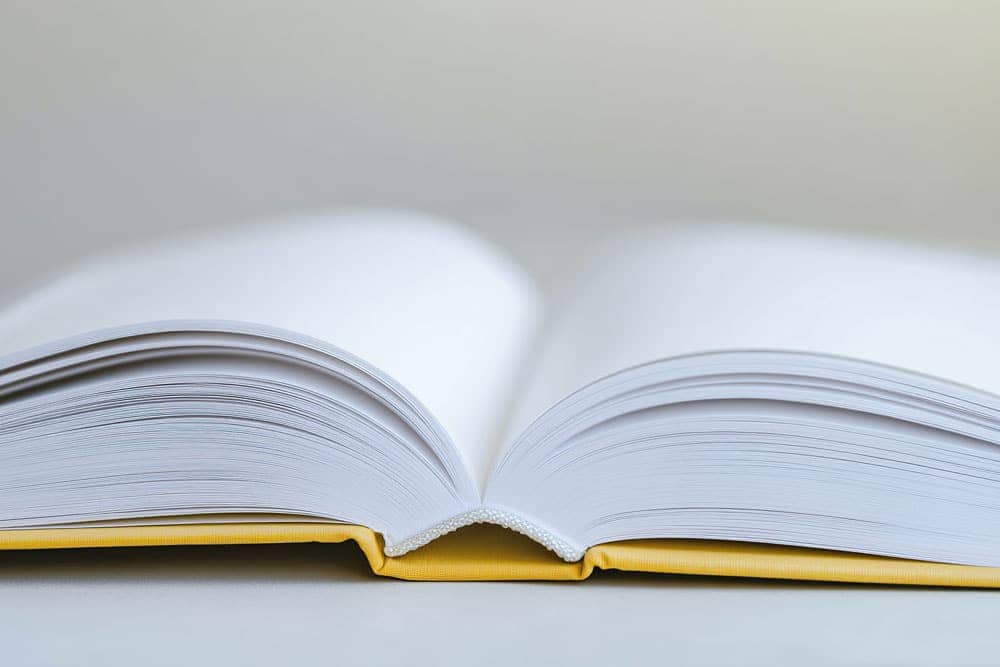
Yes. Because each signature is sewn through its own fold and linked to the next, the spine flexes instead of resisting, so the book opens to any page and stays open without being held down. This is the main reason Smyth sewing is chosen for cookbooks, manuals, and reference books.
Smyth sewn binding at Printing Partners is generally available starting around 64 pages, since a book needs enough signatures to sew, up to 800 pages. Send your exact page count and Printing Partners will confirm feasibility and pricing with your quote.
Textbooks, journals, premium publications, cookbooks, and keepsake or heirloom books commonly use Smyth sewn binding, along with any book that will be opened and referenced repeatedly for years. Publishers and organizations that need a book built to last choose it over glue-only methods.
Yes. Printing Partners sews and cases every Smyth sewn book at its own bindery at 929 W 16th Street in Indianapolis, using its own Hunkeler tipping, Ventura sewing, Bolero binding, and Diamant case-in equipment, rather than brokering the work to an outside bindery.
Smyth sewn binding costs more than perfect binding because sewing is a more specialized process than gluing. The exact difference depends on page count, quantity, and cover choice. Send your project details and Printing Partners will provide a direct quote comparing both methods.
Smyth sewn binding is the strongest choice when a book must lie flat and endure repeated use, but it is not the only practical method. Perfect binding lowers cost for paperbacks, Wire-O opens flat with a visible wire spine, saddle stitching fits short booklets, and case binding provides a rigid hardcover.
Printing Partners also offers Case Binding, a traditional hardcover option, Perfect Binding, which suits paperback books and catalogs, Wire-O Binding, which lets books lay flat with a visible wire spine, and Saddle Stitching, a cost-effective choice for shorter booklets. Compare every method on our binding guide, or see our full book printing services.
Request a Smyth Sewn Quote
Send the finished size, page count, quantity, cover preference, and interior stock if you have selected it. We will confirm the construction, spine, production fit, and direct project price.
Printing Partners, 929 W 16th Street, Indianapolis, IN 46202. Content reviewed August 13, 2026.
© Printing Partners. All rights reserved. | Privacy Policy | Publishing Principles | Ownership & Funding Info | Feedback Policy | Corrections Policy | Ethics Policy | Diversity Policy | Diversity Staffing Report | Accessibility Statement | LLMS