

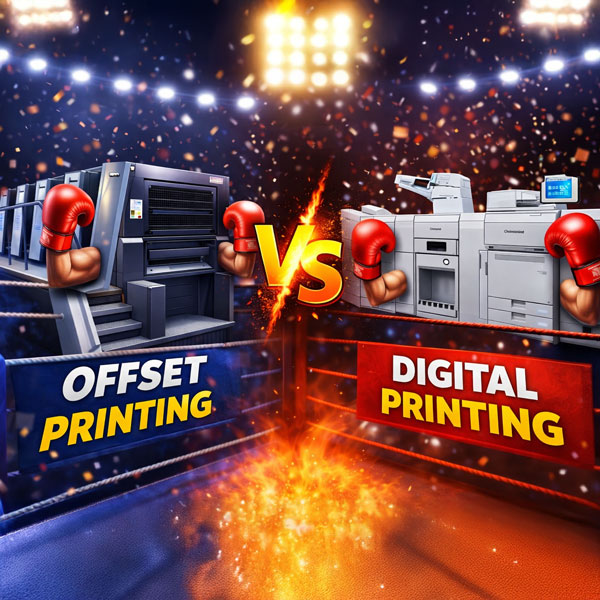
Offset vs Digital Printing: How to Choose the Right Method
Choosing between offset vs digital printing is one of the most important decisions in any print project. The right choice affects cost, quality, turnaround time, and long-term value. While both methods produce professional results, they serve very different use cases. Understanding how they differ—and where each excels—ensures you get the best outcome without overspending.
This guide explains offset and digital printing. It includes practical examples and real-world cost details. This way, you can make a smart, informed choice.

What Is Offset Printing?
Offset printing is a classic method. Ink moves from metal plates to rubber blankets and then onto paper. Offset printing has higher setup costs because plates need to be made and presses need to be calibrated. However, it becomes more cost-effective as the number of prints increases.
Offset printing is best suited for:
- Large print runs
- High color accuracy and consistency
- Specialty inks and finishes
- Long-term brand consistency
Once a press starts running, the cost per piece goes down a lot. This makes offset printing great for catalogs, books, magazines, and big marketing campaigns.

What Is Digital Printing?
Digital printing transfers files directly from a computer to the press without plates. This eliminates setup costs and allows printing to begin almost immediately. As a result, digital printing excels in speed, flexibility, and short-run efficiency.
Digital printing is best suited for:
- Short print runs
- Tight deadlines
- Variable data printing (personalization)
- Prototypes and test quantities
Digital printing is cost-effective for small amounts. However, it becomes more expensive per piece as volume increases.
Offset vs Digital Printing: Cost Comparison With Real Examples
Cost is often the deciding factor when comparing offset vs digital printing. The difference becomes clear when quantities change.
Example: 500 brochures
- Digital printing: Lower total cost, no setup fees
- Offset printing: Higher total cost due to plates and press setup
Example: 10,000 brochures
- Digital printing: Significantly higher total cost
- Offset printing: Much lower cost per piece, better overall value
A general rule:
- Under 1,000 pieces → digital printing is usually more cost-effective
- Over 2,500–3,000 pieces → offset printing typically delivers better value
Paper choice, ink coverage, finishing, and bindery can shift these thresholds, but the pattern remains consistent.
Quality and Consistency Considerations
Offset printing provides unmatched consistency across long runs. Once color is dialed in, every piece matches from first sheet to last. This makes offset printing ideal for brand-critical projects where color accuracy matters.
Digital printing delivers excellent quality for most applications, but slight color variation can occur between runs. For short-term or frequently changing materials, this difference is rarely noticeable or problematic.
Turnaround Time and Flexibility
Digital printing wins on speed. Without plates or lengthy setup, jobs can move from file to finished product quickly—sometimes same day.
Offset printing requires more preparation time, but once scheduled, it handles large volumes efficiently. For planned campaigns with higher quantities, the additional lead time is usually justified by cost savings and consistency.
How to Choose the Right Method
When deciding between offset vs digital printing, evaluate these factors together:
- Quantity needed now and in the future
- Budget constraints
- Color accuracy requirements
- Turnaround expectations
- Need for personalization or variable data
Often, the best solution is not choosing one method exclusively but selecting the right method for each phase of a project.
Conclusion
Offset vs digital printing is not about which method is better overall—it is about which method is better for your specific job. Digital printing delivers speed and flexibility for short runs, while offset printing provides superior value and consistency at higher volumes.
Printing Partners helps clients evaluate quantity, cost, quality, and long-term goals to determine the most efficient printing method. The goal is not just to print, but to ensure you get the best result and the best value for your investment.