Coated versus uncoated, uncoated versus matte, and why the same Pantone number reads differently on an uncoated sheet.
G7 Master Colorspace QualifiedISO 9001 CertifiedFSC Certified Papers Available
Uncoated paper is any sheet that leaves the mill without a clay or polymer coating applied to its surface, so the raw fiber stays exposed. That open fiber structure is what lets ink soak in slightly rather than sit on top, what lets a pen write on it without skating, and what gives it the softer, more natural feel and duller color reproduction that distinguish it from gloss, matte, or satin stocks. Most letterhead, book text, forms, and office paper are uncoated by default, and most premium invitation and stationery stocks are uncoated by design.
The Core Comparison
Coated Versus Uncoated Paper
Coated paper has a thin layer of clay or polymer applied during manufacturing, sealing the fiber surface. Uncoated paper skips that step. Every practical difference between the two, ink behavior, color, glare, feel, and cost, traces back to that one decision. The table below lays out the tradeoffs honestly, in both directions.
Property
Uncoated Paper
Coated Paper
Ink absorption & dot gain
Ink soaks into the fiber, which increases dot gain and softens fine detail and small type
Coating keeps ink on the surface, holding tighter dots and crisper detail
Color vibrancy & gamut
Colors read duller and slightly darker; a narrower gamut, especially in saturated tones
Wider gamut and more vibrant, punchy color reproduction
Glare & readability
No glare under office or reading light, easier on the eyes for long text
Gloss coatings can glare under direct light; matte and dull coatings reduce this
Writability
Takes pen, pencil, and marker cleanly, no smudging or beading
Ink and pen marks sit on the surface and can smudge or bead, especially on gloss
Bulk & feel at the same weight
Feels thicker and more substantial at an equal basis weight, a bulkier hand
Feels thinner and denser at an equal basis weight
Opacity & show-through
Generally good opacity at typical text weights, though it varies by mill and formula
Coating adds some opacity at the same base weight
Folding & scoring
Folds cleanly with standard scoring; heavier covers still benefit from a score line
Coating can crack or flake along a fold if the sheet isn't scored first
Recyclability
Straightforward to recycle and repulp, no coating to separate out
Recyclable, but the coating adds a processing step at the mill
Cost
Typically the lower-cost option for a comparable basis weight
Typically carries a premium for the coating process
Neither family is objectively better. A book manuscript, a letterhead, or a form wants uncoated. A photo-heavy brochure or a product catalog wants coated. The right call depends on what the piece needs to do.
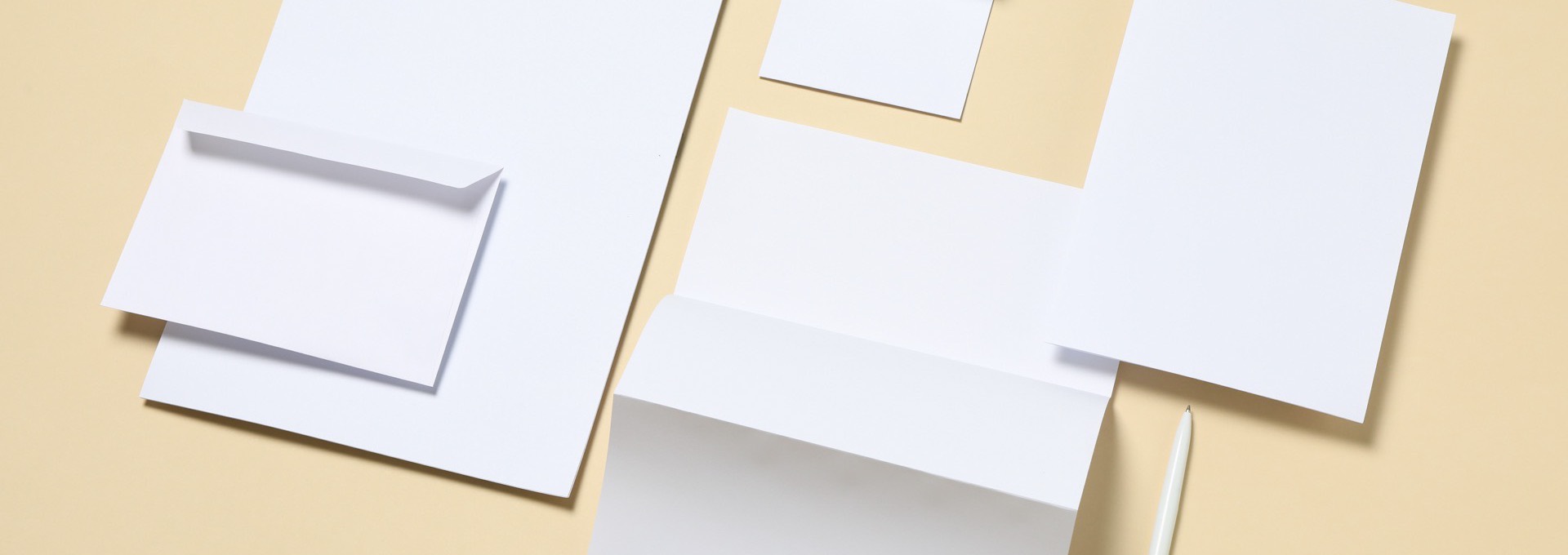
Letterhead, envelopes and forms are uncoated by default, because they have to take a pen.
The Most Confused Pair in Print
Uncoated Versus Matte: What's Actually Different
Uncoated and matte get used interchangeably online, and it is one of the most common mix-ups in print vocabulary. They are not the same thing. Matte paper is a coated sheet: it goes through the same coating process as gloss or satin stock, just formulated with a low-sheen finish instead of a shine. Uncoated paper never sees a coating step at all, at any sheen level. Matte sits between uncoated and gloss on most properties in the table above. It holds more color vibrancy and finer dot control than uncoated, because the coating is still there, but it lacks the shine and gamut of a gloss sheet, because the coating is formulated flat.
A simple way to keep the two straight: if a sheet has been coated at all, whether gloss, dull, satin, or matte, it belongs to the coated family. Uncoated means no coating was applied, regardless of how smooth or textured the raw surface feels. Silk finish falls on the coated side too, closer to satin than to true uncoated stock. When a project calls for a low-glare, printable, coated look, matte is usually the better fit. Writability and softer color point toward true uncoated stock instead.
For a full breakdown of matte finish, its weights, and where it performs best, see the matte paper guide.
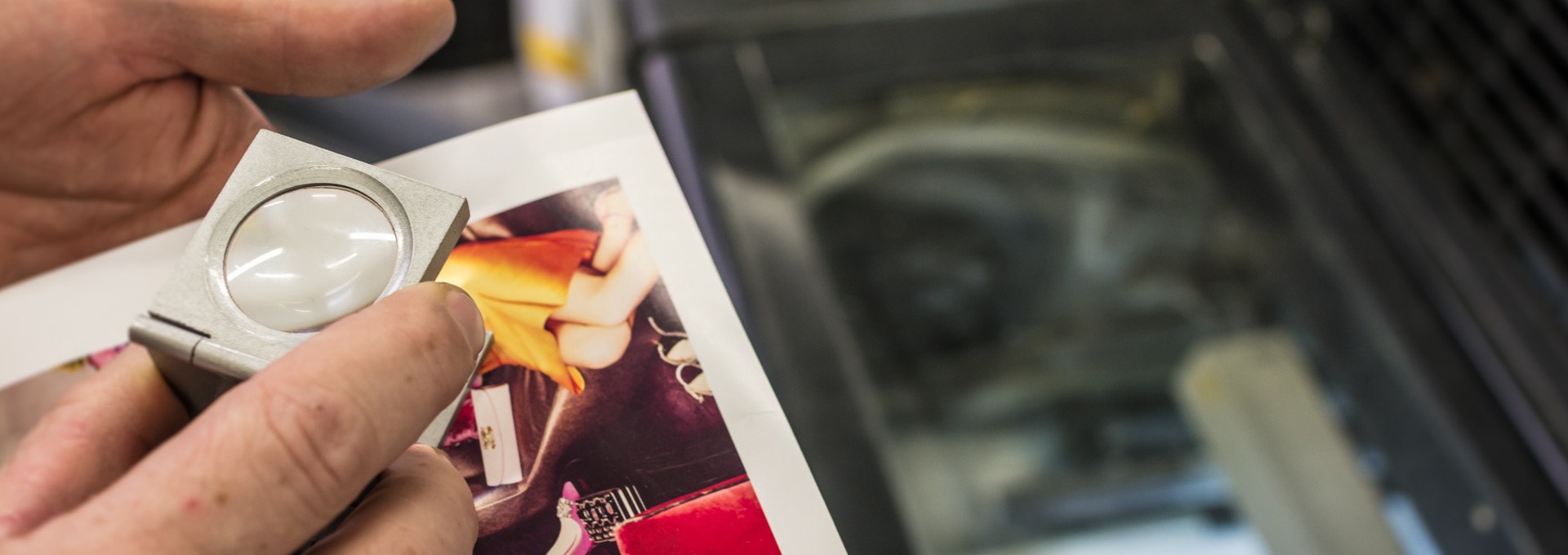
The same ink formula reads differently on coated and uncoated stock, which is why Pantone prints a C and a U swatch for every color.
Color Matching
Pantone Coated Versus Uncoated (the C and U Suffix)
Every Pantone Solid color prints in two versions in the Pantone book: a C for coated stock and a U for uncoated stock, for example PANTONE 185 C next to PANTONE 185 U. The ink formula behind both is identical. What changes is the paper it lands on. Because uncoated stock absorbs ink into the fiber instead of holding it on the surface, the same ink reads duller and generally lighter on the U swatch than on the C swatch. That's why the Pantone Formula Guide prints both side by side rather than relying on one to represent the color everywhere it might run.
The practical takeaway is to always specify a color match against the stock the job will actually run on. Pulling a Pantone number off a coated swatch and expecting it to look identical on an uncoated letterhead sets up a mismatch before the job reaches press. If a brand color needs to hold consistent across an uncoated stationery system and a coated brochure, plan for the uncoated version to read a shade softer rather than fighting it.
Stock Selection
Uncoated Weights and Finishes
Uncoated stock is sold in two broad weight categories. Text weights, roughly 50 lb to 80 lb, are used for letterhead, book interiors, forms, and newsletters, sheets meant to be read, folded, or written on rather than stood up on their own. Cover weights, roughly 80 lb to 130 lb, are thicker and stiffer, used for postcards, self-cover booklets, and anywhere the sheet needs to hold its shape on its own. Uncoated stock at cover weight is what most people mean by uncoated cardstock, and the full weight, thickness and GSM breakdown for that category lives in our cardstock guide. Basis weight describes the weight of a ream at a standard sheet size, not the thickness of a single sheet, so two stocks at the same basis weight can still feel different in the hand depending on how the fiber was formed and calendered.
Within uncoated stock, the surface finish varies by how the sheet is formed and pressed at the mill:
Wove / Smooth
Even, uniform surface with no visible texture
The default for office paper, letterhead, and forms
Laid
Fine parallel ribbing from a wire mesh mold
Reads as formal and traditional, common on legal and executive stationery
Linen
Cross-hatch texture that mimics woven fabric
Popular on business cards and invitations
Felt
Soft, slightly irregular texture pressed in during manufacturing
Used where a subtle, organic hand is wanted
Vellum
A toothy, slightly textured finish, distinct from translucent vellum drafting paper
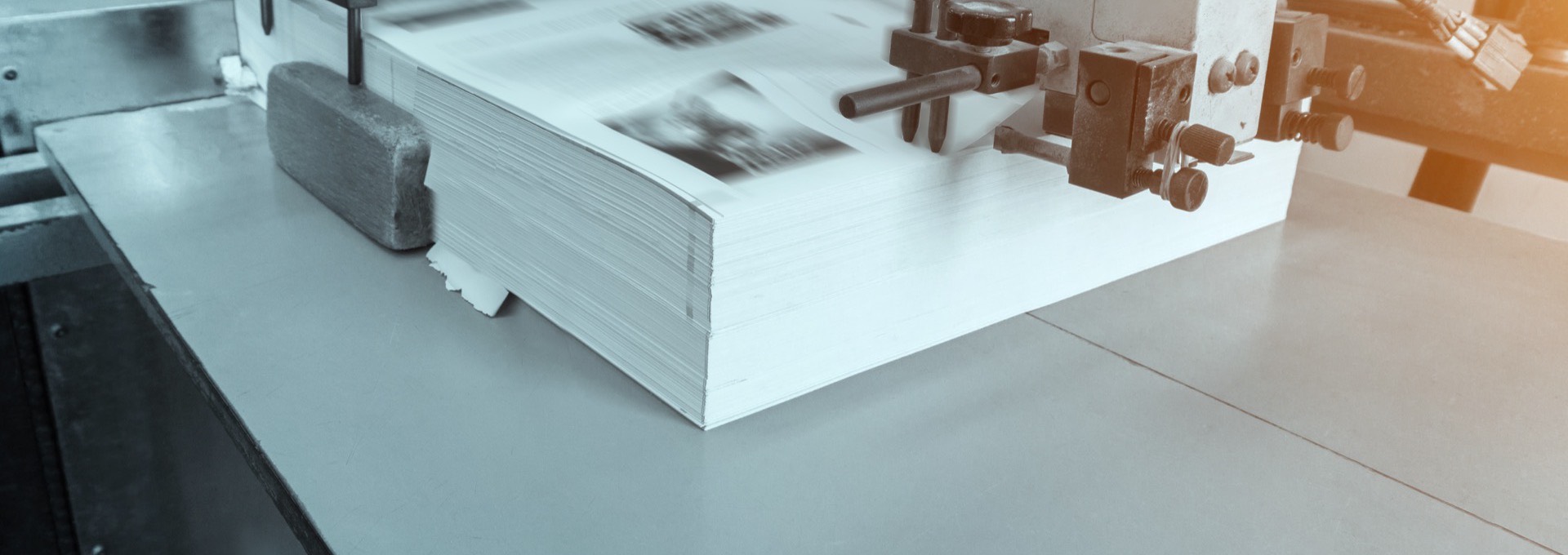
Uncoated text stock runs through the same offset and digital equipment as coated, but it takes ink very differently.
Where It's Used
Common Applications for Uncoated Paper
Book Interiors
Uncoated text stock is standard for novel and nonfiction interiors: it reads comfortably under sustained light without glare and holds up to repeated page turns. See our book printing services.
Letterhead & Business Stationery
Uncoated wove or laid stock takes a signature, a rubber stamp, or a handwritten note cleanly, which coated stock cannot do without smudging.
Envelopes
Uncoated envelope stock accepts pen and inkjet addressing directly and matches most letterhead systems for a consistent set.
Forms & NCR / Carbonless
Multi-part carbonless forms rely on an uncoated surface so the pressure-sensitive coating on the back of each sheet can transfer to the fiber below it.
Coloring Books
Coloring book interiors run on uncoated stock because crayon and marker need an open fiber surface to grip. Both skate across a coated sheet instead of depositing color. See our coloring book printing.
Not Sure Which Uncoated Stock Is Right?
Uncoated is easy to get wrong from a screen, because the whole difference is in how the sheet takes ink and how it feels. Call 317-635-2282 and we will talk through the stock against how the piece gets read, folded and handled.
What is the difference between coated and uncoated paper?+
Coated paper has a clay or polymer coating applied to the sheet after it's formed, sealing the surface so ink sits on top for sharper detail and richer color. Uncoated paper has no coating, so ink soaks slightly into the exposed fiber, producing softer color, more dot gain, and a writable, glare-free surface.
Is matte paper the same as uncoated paper?+
No. Matte paper is coated with a low-sheen finish rather than a glossy one, so it still holds ink on the surface for better color and detail than uncoated stock. Uncoated paper has no coating at all, at any sheen level, which is why it feels and prints noticeably differently from matte.
Why does Pantone print both a C and a U version of each color?+
The same ink formula looks different depending on whether it lands on coated or uncoated stock. Uncoated absorption typically makes a color read duller and lighter than its coated counterpart, so Pantone prints a C swatch and a U swatch for every color so buyers can match against the stock their job will actually use.
Can you print vibrant colors on uncoated paper?+
You can print color on uncoated paper, but expect it to read somewhat softer and less saturated than the same file on coated stock, because the fiber absorbs ink instead of holding it on the surface. For projects that depend on maximum color punch, a coated or matte sheet will hold vibrancy better.
What weight of uncoated paper should I use for a book?+
Book interiors typically use uncoated text weights in the 50 lb to 80 lb range, with the exact weight depending on page count and how much show-through is acceptable. A higher page count generally favors a lighter weight to control bulk, while shorter books can use a heavier sheet.
Why does uncoated paper work better for coloring books than coated paper?+
Crayon and marker deposit color by dragging pigment across an open fiber surface. A coated sheet seals that surface, so wax and marker ink skate across it instead of transferring cleanly. Uncoated stock is required for a coloring book to actually take color the way it's meant to.
What is uncoated cardstock used for?+
Uncoated cardstock, generally in the 80 lb to 130 lb cover range, is used for postcards, invitations, business cards, and folded pieces where a natural, writable, non-glare surface matters more than maximum color vibrancy. Linen and laid finishes are common choices within uncoated cardstock for premium stationery.
Is uncoated paper better for the environment than coated paper?+
Uncoated paper is generally simpler to recycle and repulp because there's no coating layer to process out at the mill. Both coated and uncoated stocks are recyclable, and both are available FSC certified, so the fiber sourcing matters at least as much as the coating when weighing environmental impact.