Point size, pound cover and GSM lined up in one conversion table, plus how cardstock compares to cover stock, photo paper and laser sheets.
G7 Master Colorspace QualifiedISO 9001 CertifiedFSC Certified Papers Available
Cardstock is a heavyweight, stiff paper made for pieces that need to hold their own shape,
such as business cards, postcards, folders and invitations, rather than lie flat inside a
book or letter. In the print trade it falls in the cover weight category, generally
somewhere between 65 lb cover and 140 lb cover, or roughly 175 gsm to 380 gsm, and its
thickness is most often specified in points (a point equals one thousandth of an inch).
The heavier the number, the stiffer and more substantial the sheet feels in hand.
What Is Cardstock, Exactly?
Cardstock is not a single formula or a single mill's product. It is a category, defined
more by caliper and stiffness than by one exact weight. Anything thick enough to stand up
to handling on its own, a business card, a postcard, a folder cover, a table tent, a
greeting card, gets sold as cardstock. Inside a commercial print shop the same material is
usually called cover stock, which is the trade term for the same weight class. Cardstock
can be coated or uncoated, bright white or natural, virgin fiber or recycled, and it comes
in finishes ranging from high gloss to soft touch. What ties the category together is
thickness and rigidity, not a particular look or coating.
Point size is the most common way the trade specifies cardstock thickness. A point equals
one thousandth of an inch measured with a micrometer, so 12 pt stock is 0.012 inches thick
and 16 pt stock is 0.016 inches thick. Most stocked cardstock in commercial printing runs
from 10 pt to 16 pt, with 12 pt and 14 pt covering the bulk of business cards, postcards
and folder covers ordered every week.
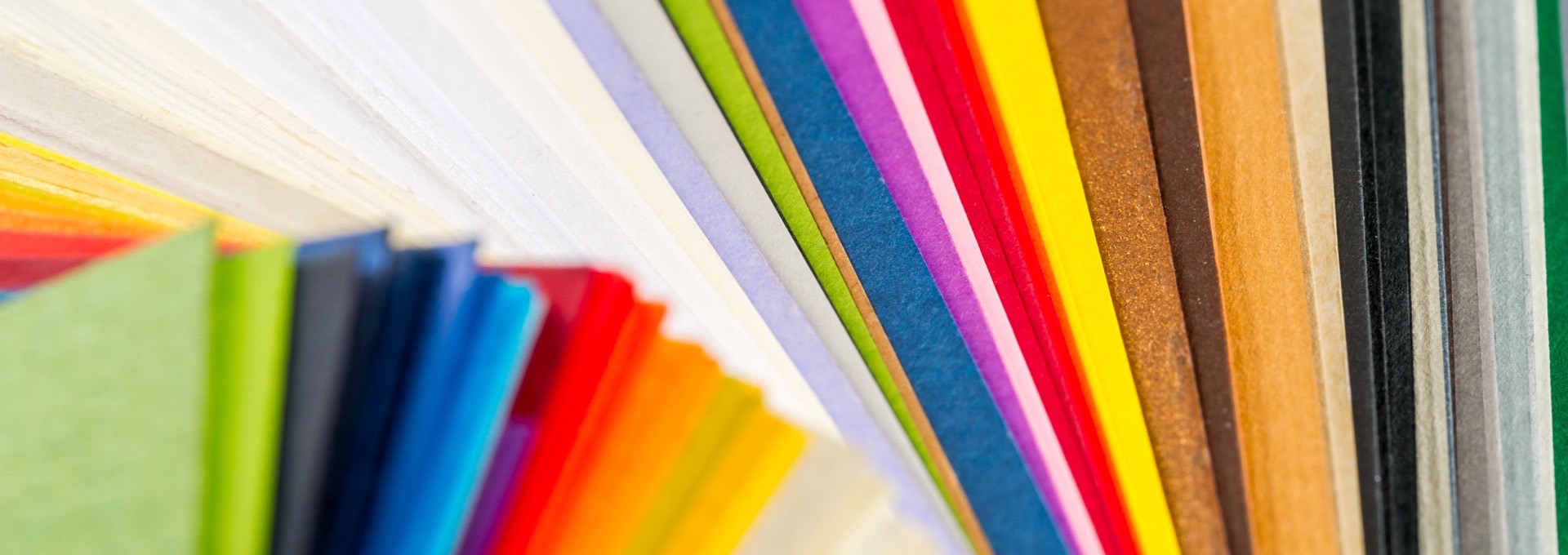
Coated, uncoated and specialty stocks all sit in the same cover weight class. The finish, not the weight, is usually what decides the job.
Cardstock Weight, Thickness and GSM: The Conversion Table
Point size, pound weight and GSM measure different things. Point caliper is a direct
measurement of physical thickness. Pound cover weight is the weight of 500 sheets cut to
the cover parent sheet size, which is a basis weight, not a thickness measurement. GSM,
grams per square meter, is a true weight per area and the most consistent unit across
mills. Because caliper and basis weight are measured differently, the same point size can
land at a slightly different pound or GSM figure depending on the paper mill, the fiber
blend and the coating. The ranges below are accurate representations of what you will see
quoted across major mills, not a single fixed formula, so treat any point to pound
conversion as a close range rather than an exact figure.
Approximate cardstock (cover stock) conversions by point size
Point (caliper)
Lb cover (approx.)
GSM (approx.)
Feels like
8 pt
~60 to 65 lb cover
~165 to 180 gsm
Light card, the weight of a reply card or index card, still some flex in the sheet
10 pt
~70 to 80 lb cover
~190 to 215 gsm
Standard postcard and lighter folder stock, firm and holds a crease well
12 pt
~80 to 100 lb cover
~215 to 270 gsm
Common business card and postcard weight, sturdy with a confident hand feel
14 pt
~100 to 115 lb cover
~270 to 310 gsm
The commercial default for business cards and premium postcards, noticeably stiffer than 12 pt
16 pt
~120 to 130 lb cover
~325 to 355 gsm
Heavy premium cards and presentation folders, near the ceiling for many digital presses
18 pt
~140 to 150 lb cover
~380 to 405 gsm
Rigid, tag like stock used for hang tags and thick invitations
24 pt
~180 to 200 lb cover
~490 to 540 gsm
Board like rigidity, approaching the thickness of thin chipboard
A quick sanity check on the "how many pounds is cardstock" question: 110 lb cover
cardstock sits inside the 14 pt row above, so figure roughly 295 to 300 gsm. A 250 gsm
cardstock sheet lands between the 10 pt and 12 pt rows, so figure roughly 90 to 95 lb
cover. These are close estimates for planning a job, not a spec you should
quote to a mill without confirming their own conversion chart.
Cardstock vs. Cover Stock: Same Stuff, Different Name
This one has a simple, direct answer. In commercial printing, cardstock and cover stock
are effectively the same material. Cover stock is the formal, trade side name for
heavyweight sheets built to the cover parent sheet size, the category a paper mill or a
press operator will use. Cardstock is the everyday, customer facing name for the same
category, the word most people reach for when they mean a card or a folder that can stand
up on its own. When you call Printing Partners and ask for cardstock, we will quote you
cover stock, because that is the shelf it comes from. The nuance worth knowing is that
"cover" tells you the weight class while "cardstock" is really describing the end use, so
the two terms overlap almost completely but are not defined by identical criteria. You will
occasionally see "cover stock" used for slightly heavier or more specialized sheets, such as
cover stock built for offset packaging, while "cardstock" gets used more loosely for
anything stiff enough to hold a shape.
Cardstock Compared to Other Paper You Might Be Considering
A lot of the confusion around cardstock comes from comparing it to papers that sound
similar but sit in a different category entirely. The table below lines up the stocks
people ask us about most.
Cardstock vs. the paper types it gets confused with
Stock
Typical weight
Key difference from cardstock
Cardstock / cover stock
~65 to 140 lb cover (175 to 380 gsm)
The baseline. Stiff, freestanding, coated or uncoated.
Laser or copy paper (80 lb, 100 lb)
80 to 100 lb TEXT (118 to 148 gsm)
Text weight, not cover weight. An 80 lb or 100 lb text sheet is roughly half the thickness of a cardstock sheet carrying the same number, because text and cover are measured against different parent sheet sizes.
Glossy or matte photo paper
~200 to 280 gsm
Built for photographic ink saturation and color depth on inkjet equipment, not for commercial press runs. It handles differently and is rarely stocked for offset or digital print jobs.
Coated cover (C1S / C2S)
Same range as cardstock
Not a separate weight category, just cardstock distinguished by which side carries the coating.
The short version: if a spec sheet says "text" or "bond," it is a lighter, more flexible
paper meant for pages inside a document. If it says "cover," it is cardstock by another
name.
Gloss and matte laminate are applied after printing, so the same cardstock can finish either way.
Weight tells you how thick the sheet is. Finish tells you how it looks and feels, and
cardstock is available in nearly every finish Printing Partners stocks.
A shiny, reflective coating on both sides that makes color and photography pop. The most common finish for business cards and postcards that lead with a photo.
Glossy or matte on the front, uncoated on the back. A common choice when the reverse needs to be written on or glued, such as folder inserts and packaging.
Coated front and back for sharp, saturated printing on both faces. The standard for double sided business cards and postcards.
Soft Touch
A velvety, low sheen laminate applied over cardstock for a premium, tactile finish. We can quote soft touch lamination on request for folders, covers and presentation pieces.
Not sure which weight or finish fits your project? Tell us how the piece gets handled, whether
it folds, and whether anything gets written on it, and the right cover weight usually picks
itself. Request a print estimate
or call 317-635-2282.
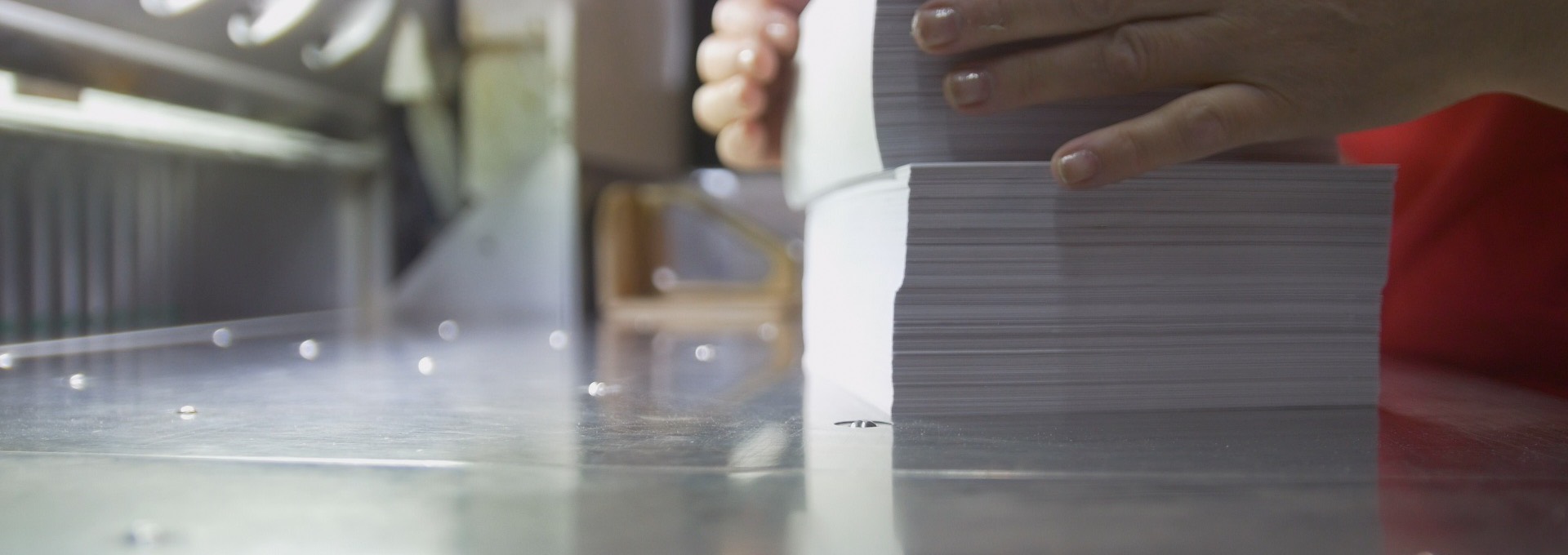
Cardstock is trimmed after printing, which is where a heavier caliper starts to matter.
What We Print on Cardstock
Cardstock is the workhorse stock behind most of what leaves our Indianapolis facility. A few of the pieces we run on it every week:
Business cards, almost always 12 pt to 16 pt, coated or uncoated depending on how the card needs to feel and whether it will be written on.
Postcards, typically 10 pt to 14 pt for enough rigidity to travel through the mail without bending.
Pocket folders, usually 14 pt to 18 pt C1S or C2S so the folder holds its shape once it is stuffed with inserts.
Invitations and note cards, generally 14 pt to 16 pt on an uncoated or cotton feeling stock so ink and handwriting sit well on the surface.
Bookmarks, door hangers and custom perforated cardstock pieces, typically 10 pt to 14 pt depending on how the piece is meant to be handled or torn.
Cardstock Frequently Asked Questions
What type of paper is cardstock?
Cardstock is a heavyweight paper category, technically classified as cover stock rather than text or bond weight. It typically runs from about 65 lb cover (8 pt) up to 130 lb cover (16 pt) or heavier, though the trade defines it more by stiffness and caliper than by a single weight. Cardstock can be coated, uncoated or specialty finished.
What weight is card stock paper?
Most cardstock falls between 65 lb cover and 130 lb cover, or roughly 175 to 355 gsm. Lighter stock in that range, around 65 to 80 lb cover, is common for reply cards and lighter folders. Heavier stock, 100 lb cover and up, is standard for business cards and premium print pieces. Exact numbers vary by paper mill.
What is 14 pt cardstock in pounds?
14 pt cardstock generally falls between 100 lb cover and 115 lb cover, roughly 270 to 310 gsm, depending on the paper mill and finish. The figure quoted most often for 14 pt is 114 lb cover, about 308 gsm. Point size measures physical thickness while pound weight measures basis weight, so the two scales do not convert with perfect precision. Treat any 14 pt to pound conversion as a close range, not an exact figure.
What is 16 pt cardstock in pounds?
16 pt cardstock typically lands between 120 lb cover and 130 lb cover, or about 325 to 355 gsm. It is among the heaviest stock many digital presses can run, which is why 16 pt is the ceiling for premium business cards and presentation folders rather than a starting point.
What is the difference between cardstock and cover stock?
In everyday language cardstock and cover stock describe the same material. Cover stock is the term used inside the print trade for heavyweight sheets built for covers, cards and folders, while cardstock is the word most customers use for the same category. When you ask a print shop for cardstock, they will quote you cover stock.
Is cardstock the same as 100 lb paper?
Not necessarily. An 80 lb or 100 lb laser paper is usually text weight, made for double sided printing through a laser printer and noticeably thinner than true cardstock. True cardstock is measured in cover weight, so 100 lb cover cardstock is roughly twice as thick as 100 lb text paper even though the pound numbers match.
What is C2S cardstock, and how is it different from uncoated?
C2S stands for coated two sides, meaning both faces carry a gloss or matte coating for sharp, saturated printing on both sides. Uncoated cardstock has no coating on either side, so it prints softer colors but takes handwriting, ink stamps and adhesive better. C1S falls in between, coated on one side only.
Do you offer recycled cardstock?
Printing Partners is FSC certified, so we can run cardstock carrying FSC chain of custody documentation. Recycled content varies by mill and by stock, and availability changes, so the specific recycled cover weight for your job is worth confirming before you spec it. Call 317-635-2282 and we will check what is available in the weight and finish you need.
Get the Weight Right the First Time
Point size and GSM only tell you so much on a screen. Start with a quote and we will walk you
through the cover weight and finish that suit the piece, the run length and the way it gets
handled once it leaves here.